A few weeks ago, I started using Hermes Agent (after experimenting with Open Claw). I think for non-coding, mostly non-technical work, this was exactly what I was looking for.
My main use case is around research and recalling things that I’ve read. I enter articles and books I’ve read, and do a re-reading of it while the AI finds entities and concepts for each chapter or segment of reading.
Then, there’s a cron job to do some active recall to force me to think through what I’ve just read about. Sometimes, these ideas will help with re-incorporating back into everyday life.
But of course, I have to be careful. AI loves to stack on these things in cron jobs. You have to be careful with tailoring only the things that work for you and to eliminate the rest.
The chatbot is a jarring experience with a coding workflow. You have to copy in code from brownfield projects, the output might miss context, and requires much editing back and forth.
To find value, you must use an agent. An agent is the industry-adopted term for an LLM that can chat and invoke external behavior in a loop1 At a bare minimum, the agent must have the ability to: read files, execute programs, and make HTTP requests.
Understanding effective agents require human attention first
The thing that resonated with me the most is the ==Automation Loop==. In any automation, you need a clear understanding of how a task can be repetitive. Hashimoto talks about this in his step 2, where you have to have a clear output. It doesn’t make sense to automate something you have no understanding of. If you’re using AI this way, this is called a one-off, not an automation. Agents aren’t great at vague activity because that needs more hand holding.
I forced myself to reproduce all my manual commits with agentic ones.
Step 4 further extends this idea by giving agents the work you know it can handle. Let them kick off, turn off the notifications, and come back later to their PRs. For Hashimoto, this means still working on coding tasks you know the agent isn’t good at, or doesn’t have clear answers for. This helps counteract Anthropic’s paper on How AI assistance impacts the formation of coding skills.
Step 5 is about taking all of the bad mistakes, and re-writing prompts in the AGENTS.md file to stop the agent from doing that again. Then have a way to validate itself, like unit tests, screenshots, etc., to make sure that it’s able to find its own mistakes.
Another thing that took by surprise is this habit.
block out the last 30 minutes of every day to kick off one or more agents
This is a huge revelation, because it tells me agents actually have utility when you don’t have to babysit it for. This is what Hashimoto does:
Deep research sessions where I’d ask agents to survey some field, such as finding all libraries in a specific language with a specific license type and producing multi-page summaries for each on their pros, cons, development activity, social sentiment, etc.
Parallel agents attempting different vague ideas I had but didn’t have time to get started on. I didn’t expect them to produce something I’d ever ship here, but perhaps could illuminate some unknown unknowns when I got to the task the next day.
Issue and PR triage/review. Agents are good at using gh (GitHub CLI), so I manually scripted a quick way to spin up a bunch in parallel to triage issues. I would NOT allow agents to respond, I just wanted reports the next day to try to guide me towards high value or low effort tasks.
I think this is actually worth keeping a runbook for in that last 30 minute block to kick off the agent to do other things for me.
Step 6 also talks about running agents when you can.
I don’t want to run agents for the sake of running agents. I only want to run them when there is a task I think would be truly helpful to me. Part of the challenge of this goal is improving my own workflows and tools so that I can have a constant stream of high quality work to do that I can delegate. Which, even without AI, is important!
This is the hard part of delegation. We can try our best to keep the orchestration going, but like in Gas Town’s Agent Patterns, Design Bottlenecks, and Vibecoding at Scale, you would need another layer for this. Instead, work at the pace that makes sense with understanding the previous section first.
I’ve changed my weekly workflow. I’ve set it up personally for the past few weeks, and now is a great time to try this out. I haven’t made the “weekly note” for almost a year now, because it got overwhelming. Instead, AI tools help organize this much better than what I can do. So let’s try this out for a few weeks. Introducing: Weekly Browsing.
Steve Yegge’s Gas Town post is absolutely bonkers in terms of AI token spend.
It tries to keep a perpetual flywheel going in terms of generating applications.
And who can blame him? The tool itself was vibe coded in Python, then Go. It’s likely never to run on my machine because I can’t think that fast in terms of the number of agents I want to work.
It also reminds me, the simpler explanation of how things work is much better.
Maggie Appleton’s post is a lot easier to understand from someone who has a visual expertise in breaking down how something complicated could work using the correct metaphors.
It also helps that the images produced aren’t AI generated from Google’s Nano Banana.
Design and planning becomes the bottleneck when agents write all the code
It turns out to be slightly difficult to make happen because of the way current models are trained. They’re designed as helpful assistants who wait politely for human instructions. They’re not used to checking a task queue and independently getting on with things.
Stakes matter. If an agent breaks some images on your personal blog, you’ll recover. But if you’re running a healthcare system where a bug could miscalculate drug dosages, or a banking app moving actual money around, you can’t just wave an agent at it and hope. Consequences scale up fast.
Honestly, the past few months has been another whirlwind of AI tools that makes it hard to keep up. Vibe coding was so last February of 2025, and we’ve moved on to agent orchestration, vibe engineering, and a slew of other things I’ve missed.
I know I’m not the only one feeling this way at all, and it reminds me that I do, indeed, need to continue blogging my own thoughts.
Quick website news. I’ve added callouts for some areas of the website, including the newsletter at the bottom.
I removed a bunch of social links that no longer are representative of where I’m at online.
I’ve removed the two-layout style for a single one since the content I’m usually here to bring is not worth the width.
I’ve created link previews! For select (and recent) links, I’m now using a LinkPreview Astro component.
It’s using the metadata from websites to create these nice link previews.
There’s a manual override in case the parsing did not reach my standards of link previews.
As an example, the new Track Star Podcast is awesome, and here’s the latest episode I watched.
There’s many other small updates to make the website feel more user friendly, including updated pagination and updating tags.
Also, the line breaks in essay content is longer now, so you can figure out if you want to choose to read more.
I’ve been thinking how much politics I’ve been paying attention to since the inauguration.
I think the expectation things would be different and the enthusiasm felt about how some tech folks thought we could built government better was at best a shortfall.
I didn’t have those personal feelings as I felt much the opposite, on how to prepare for authoritarianism and tyranny.
That’s why I think this podcast conversation between Jasmine Sun and Kelsey Piper was an eye opener to understand and keep tabs on the tech community sentiment on current US politics.
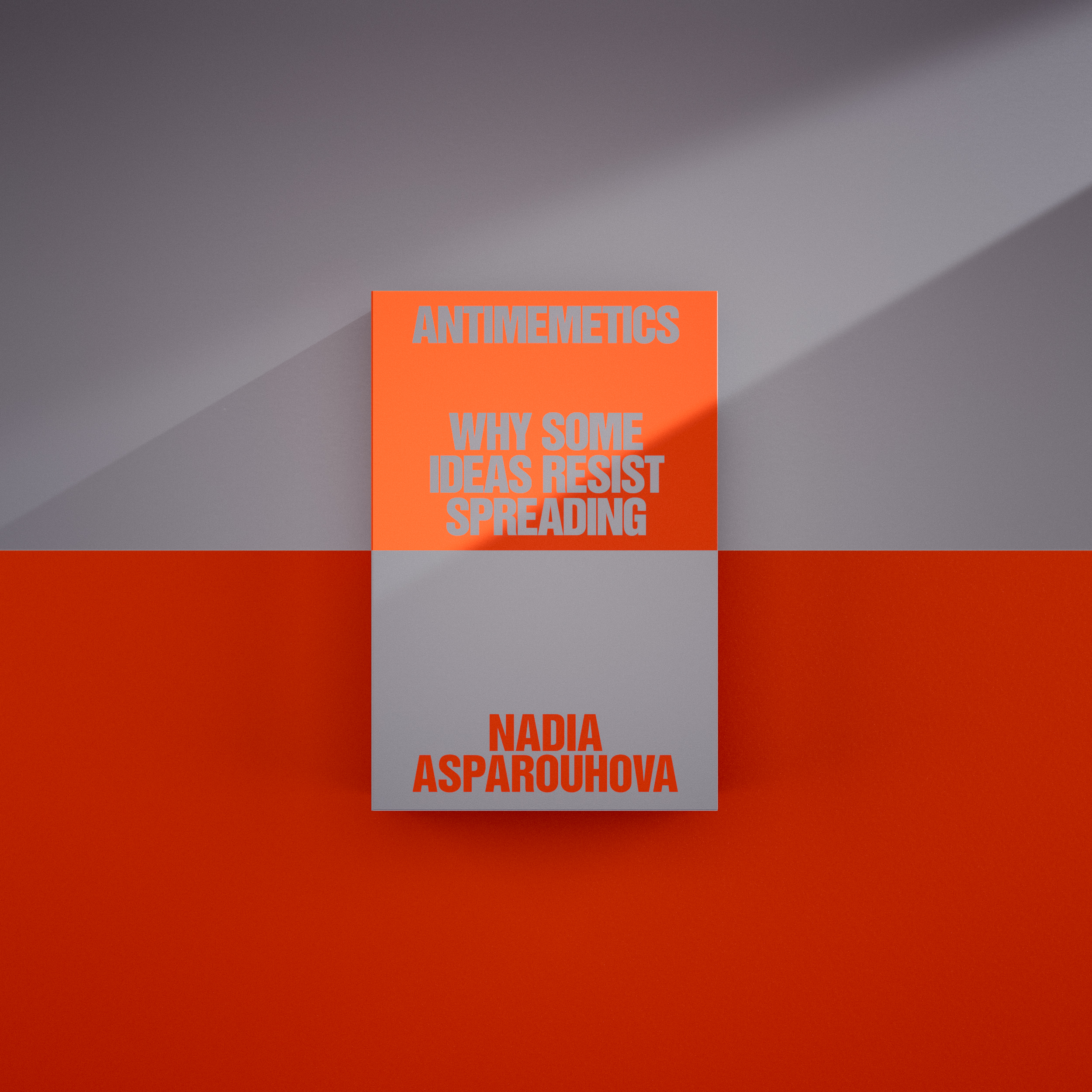
This pairs very nicely with understanding extremist views from Nadia Asparouhova’s book release this year, Antimemetics: Why Some Ideas Resist Spreading.
I have a lot to say about this book, but I’ll do a write-up later.
Back to the conversation, I think my previous post about how the vibes are off is a much better metric of how Democrats lost the 2024 election in a huge way because they were not assessing what public sentiment was anymore.
We need more acknowledgement of real-world struggles, not the stats of GDP numbers.
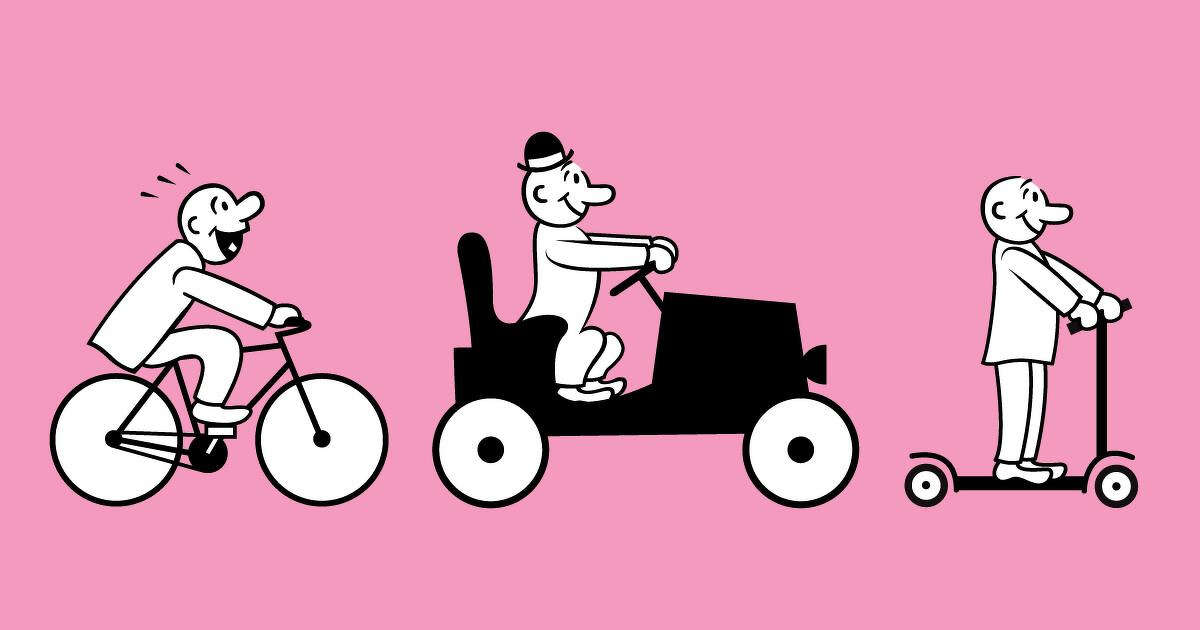
Back in the day, I used to get the SF Chronicle newspaper delivered. They had this iconic “Little Man” where I remember seeing them in movie reviews. I was never the biggest fan of the star rating system. The thumbs up system that Siskel and Ebert had was a little better as two critics giving their opinions. The little man had visuals that explain how I would recommend a movie to someone. As not even worth your time, something to sit through, and standing ovation (or in the little man’s case, jumping out of your seat clapping).
Currently reading: The Origins of Efficiency by Brian Porter
I’ve been reading his blog for the past year, and I was super excited to pick up his book this week. If you’re going to buy it for digial, I recommend the Kobo edition since it’s DRM-free (unlike Amazon).
We watched Sinners yesterday, and it’s really incredible. I’m looking to overhaul my media log soonish. Given no updates on this website since the spring, it’s hard to put any hard deadlines on this website. I still do weekly reviews, although incredibly personal. And I’m inspired by some other websites to do more short form, like Tumblr-esque, with new web paradigms.
For example, there’s this blog roll viewer from Jason Kottke’s website called “kdo rolodex” that I really love and I want to create a widget like that. And I think having links with a card view with open graph data (especially images) will be more helpful.
I started using Arc March 2023 and thought I’d never have to look back. It was a really exciting browser to use with so much potential. I loved watching videos they made about potential features that could be extremely useful.
Now that the Browser Company (BCNY) has gone all in with Dia Browser, the support for Arc has been just the essential, i.e. Chromium updates. I had a custom Chrome extension break a few weeks back, and I could see the writing on the wall. If this company doesn’t want to fix their browser, then it’s time to migrate. But where?
The Alternatives
Really, there are a few browsers I thought are worth migrating to.
Dia Browser
For the same reason I don’t want to use Comet (Perplexity’s browser), I don’t like these AI-forward web browsers. At least yet. There’s the privacy concerns that get to me, especially around memory. And I just don’t think they are ready for prime-time yet. Plus, I feel really slighted by BCNY pulling the rug from under us with Arc, and I don’t know if I’m ready to migrate to a beta product from a well-established one.
Brave
I’ve used it extensively before around 2017. I think their Crypto play is strange, and I usually converted my BAT into BTC or ETH at the end of the day. But those Ads were really annoying. I eventually went back to Chrome.
Safari
I already use it as a mobile browser, and I’ve thought about doing it. They have the sidebar, but it doesn’t feel as snappy and feature-tich as it should be.
Zen Browser
To be honest, I tried it last year, and couldn’t bite the bullet to switch over. It felt like an incomplete product at the time, with alot of the things I loved about Arc just not there. That fear has since been squashed now that I’ve used it fresh again, and most things are there. The folders aren’t there, but honestly, they aren’t a priority for me as much as having access to my custom extensions. I made the push last week and have battle tested it. It’s ready to go, and really snappy too.
Migrating to Zen Browser
I’ll walkthrough the different steps that I had to go through when migrating from Arc to Zen.
[!Note] This section was AI assisted. How? I wrote an initial outline and checklist of all the things I had to do the migration. After checking off the essentials, I wrote up a bunch of gotchas and saved the links. After that, I shoved my note into Gemini 2.5 Pro and asked it to summarize this. After the initial generation, I edited the piece and made it sound more in my tone and language.
1. Import Bookmarks
The first step was a standard bookmark import from my previous browser. I used this tool to do the export from Arc since there’s no native way to do it.
2. Create Spaces
I recreated my Arc-style workflow by setting up the following Spaces:
Work Planning
Work Focus (a programming space)
Work Design
Personal
House Management
Financial
3. Install Essential Extensions
I installed my core extensions:
1Password
My personal “Markdown Copy Tool” that I have customized for specific sites
uBlock Origin (this one is huge. Screw Chrome and the manifest v3 changes that cut-off a really good ad-blocker)
Obsidian Webclipper (I also imported my existing settings for this)
4. Configure Browser Settings
Search Engine: Switched the default to DuckDuckGo. (Maybe Kagi in the future)
Auto-Tab-Closing: Actually never set this up, so reach out if you know how to do it.
UI/UX: Tweaked various settings to make the experience feel more familiar to Arc.
5. Update Keyboard Shortcuts
Mapped a shortcut to Toggle Compact Mode.
Removed the default shortcut for “save page” to avoid conflicts.
6. Set Up Pinned Tabs
I pinned my frequently used sites:
YouTube
Spotify
Calendar
Readwise
7. Add Custom Search Completions
I added several custom search engines to the command palette for quick access:
Perplexity
Kagi
ChatGPT
Reddit
Twitter/X
Brave Search
WikiVoyage
8. Join the Community
I subscribed to the r/zen_browser subreddit to stay updated.
Key Differences & Gotchas
Here are some of the notable differences and things to be aware of when moving from Arc.
Workspaces & Profiles (A Major Plus): Spaces can be tied to a profile, which functions as a Mozilla Multi-Account Container. This means you can be logged into different accounts (e.g., personal vs. work Google accounts) in different Spaces without conflict. Pinned tabs are also tied to the profile, allowing for different sets of pinned tabs per workspace.
Glance vs. Little Arc: Zen’s equivalent of Arc’s “Little Arc” for previewing links is called “Glance”.
Tab Management: Dragging a tab to a different space does not work. You must use the context menu option to move it. On the plus side, Tab Folders are expected in the next release.
Command Palette Limitations: The command palette is not as powerful as Arc’s yet.
You cannot activate extensions from it.
It lacks actions like “Open Dev Tools” or “Take Screenshot”.
Screenshot Tool: Zen has a native screenshot tool (Cmd+Shift+S), but it currently lacks annotation features like drawing arrows or adding text.
No DRM Support: Zen Browser does not have a Widevine license. This means DRM-protected content from services like Netflix or Hulu will not play. From the FAQ:
Zen Browser currently lacks DRM support… This means DRM-protected media cannot be played in Zen Browser for the foreseeable future.
No “Boosts”: There is no equivalent to Arc’s “Boosts” feature for injecting custom CSS and JavaScript into websites.
Local Development: localhost pages don’t trigger a special “developer mode” UI with easy-access shortcuts, unlike Arc.
There’s a idea by Elle from doing postcards about making a note in her app about these themed ideas that then she puts like different media into to see how they fit well with those and I think that if we make a collection like that that would be perfect
It’s only mid-week, and I’m surprised by the end of the month closing in on us. Two months into 2025, and I feel exhausted. Both physically because of sleep, and mentally as I’ve been behind on my weekly updates.
Record (write or voice memo) all of your questions and observations. When done, ask everything to an expert or top-tier AI. Save the answers to re-read later.
The engineers are mostly young men (I found one woman - Alexandra Beynon). If you’re a woman, you’re the secretary, hiring manager, communications, or other non-technical roles
The terrible berating at the white house is the butt of all jokes.
“The vibes are off” is a colloquial expression used to describe a situation where something feels wrong or uncomfortable, even if it cannot be precisely explained. It suggests that the atmosphere or emotional tone of a place, interaction, or event is not as expected or desired. This phrase often implies a sense of unease or discomfort that is sensed intuitively rather than being based on specific, tangible evidence. The term “vibes” refers to a distinctive feeling or quality that can be sensed, often involving shared emotional states or atmospheres.
Gary’s economics explains more of how the public commons perceives the economy vs economists
The vibes are off.
Some advertisers see Meta pulling back from moderation as a signal they should stop pushing social media outlets to keep hate speech in check, according to The Wall Street Journal. Some have reportedly already stepped back:
…the Association of National Advertisers, [which] represents major advertisers such as Procter & Gamble, AT&T and General Motors, quietly ended a brand-safety effort called “Engage Responsibly,” partly to avoid scrutiny or litigation…
And then there’s this.
Maybe when we say the vibes are off, what we really mean is that every person you pass on the street now feels like a glimpse of another dimension behind a glass.
— Whizy Kim, The Vibes Are Off: COVID & Losing Shared Reality
This has been a catch-up week. We cancelled the dinner with Adriel, which I feel bad about. But in that, it’s been trying to rest up. Morgan and I are more seriously talking about kids, so I need to start my research. The world feels more and more ablaze.
Notes
It’s sad the complete carelessness and wreckage this administration.
Given developments at the Kennedy Center, effective today
I am resigning as artistic advisor to the NSO.
Not for me.
It’s been a wonderful 8 years working with Kennedy Center President Deb Rutter, fellow artistic advisor Renee Fleming, and the entire NSO staff, encouraging thousands of fresh new audiences to appreciate symphonic music. Mostly, and above all, I will miss the musicians of our nation’s symphony orchestra - just the best!
I have this folder in my notes app called “hyperspecific media collections”, where I find a specific mood or topic I love and compile a media collection. They consist of book quotes, song lyrics, paintings, and scenes from movies or television shows. I love the idea that all forms of art and creativity are intricately connected, and seeing these parallels and similarities allows me to truly appreciate art.
Colin and Samir interview Johnny and Izzy Harris about their careers and the creation of their media company, NewPress. (Also, see NewPress network’s other shows like Search Party and Tunnel Vision).
Key Principles for Building a Creative Organization
Bias towards action - Make decisions quickly, do things fast, and solve problems without overthinking.
Treat others with kindness and respect, both within and outside the team.
Templates - Find where structure works and leaves room for creativity.
They specifically mentioned templates in the context of creating a reliable system that supports creativity. Templates refer to establishing repeatable formats that streamline the creative process and improve team collaboration.
Johnny Harris mentioned that script templates were a very large document with tables, color coding, and other elements that enable a team to work together with communication and structure. Izzy Harris added that these are structures that still allow for creativity. The aim is to systemize repetitive creative tasks without constraining creative output, enabling consistent execution and scalability.
In my own way, templates have allowed me to stay focused, also had to grow organically because I need to understand the underlying structure first
Care more about getting it right than being right. That lends itself to feedback and being open to it.
The odd thing about Voice Notes
Johnny and Izzy Harris use voice notes as a method of communication to increase efficiency and maintain a personal touch. Johnny uses voice notes, looms, and Marco Polos to communicate with his team, as he can convey what needs to be said in minutes. Izzy noted she is delighted by 6 second voice notes.
Voice notes are useful for asynchronous communication. Team members do not need to be available at the same time in order to communicate effectively
Voice notes allow for more detailed explanations and can convey nuance and tone more effectively than text-based communication
NewPress
New Press is envisioned as a new news media entity that will function as an umbrella company overseeing five to eight Creator-led, independent journalism channels.
Here’s a breakdown of what New Press is, what to expect from its offerings, and how it aims to differentiate itself from entities like Vox, according to the sources:
Structure and Mission:
Creator-Led Channels: New Press will consist of multiple channels, each led by independent creators.
Operational Support: While creators will manage their channels creatively, New Press will handle operational and project management aspects. This includes brand deals, agency relations, syndication, publishing, upload timelines, and providing a project management team and thumbnail designers.
Shared Resources and Collaboration: Creators will have the opportunity to collaborate, brainstorm, and support each other.
Offerings to Creators:
Financial Security: Creators will receive a salary, benefits, and a share of the channel’s revenue as it grows.
Creative Freedom: Creators can focus on content creation without the burden of business operations.
Operational Support: New Press provides a full operations team to handle tasks such as project management.
Content and Accessibility:
Accessibility: New Press aims to make videos accessible to a wide audience by using plain language and avoiding jargon.
Rigorous Journalism: Content will be deeply researched and fact-checked.
Visual Storytelling: Emphasis is placed on visual elements in their videos.
Differences from Vox:
Creator Focus: New Press prioritizes individual creators and their brands over the New Press brand itself.
Talent Retention: New Press aims to retain talent by offering fair compensation and creative freedom.
Revenue and Creative Separation: New Press intends to keep creative and operational departments separate, preventing revenue pressures from negatively impacting content creation.
Maintaining Scrappiness: New Press aims to avoid excessive overhead and bureaucracy.
Key Principles to Guide New Press:
Bias Toward Action: Make decisions quickly and act decisively.
Kindness: Treat everyone with kindness and respect.
Structure: Balance structure with creative freedom.
Focus on Getting it Right: Prioritize accuracy and learning over being right.
It feels like it’s been a long week as Susan asked me to help her with Money, and over the weekend we are having a dinner w/ Adriel. Morgan has been on campus 4 days this week, and it feels like far too much for her.
It’s interesting HuggingFace is using the 671B model to create a distilled model that’s more accessible. I’m curious when I can run one of these small models on my laptop
I’m compiling a list of why AI isn’t replacing the workforce and those other lies. It doesn’t happen as easy as this, and it’s not a 1-to-1 replacement (like the issues that we have without DBAs)